

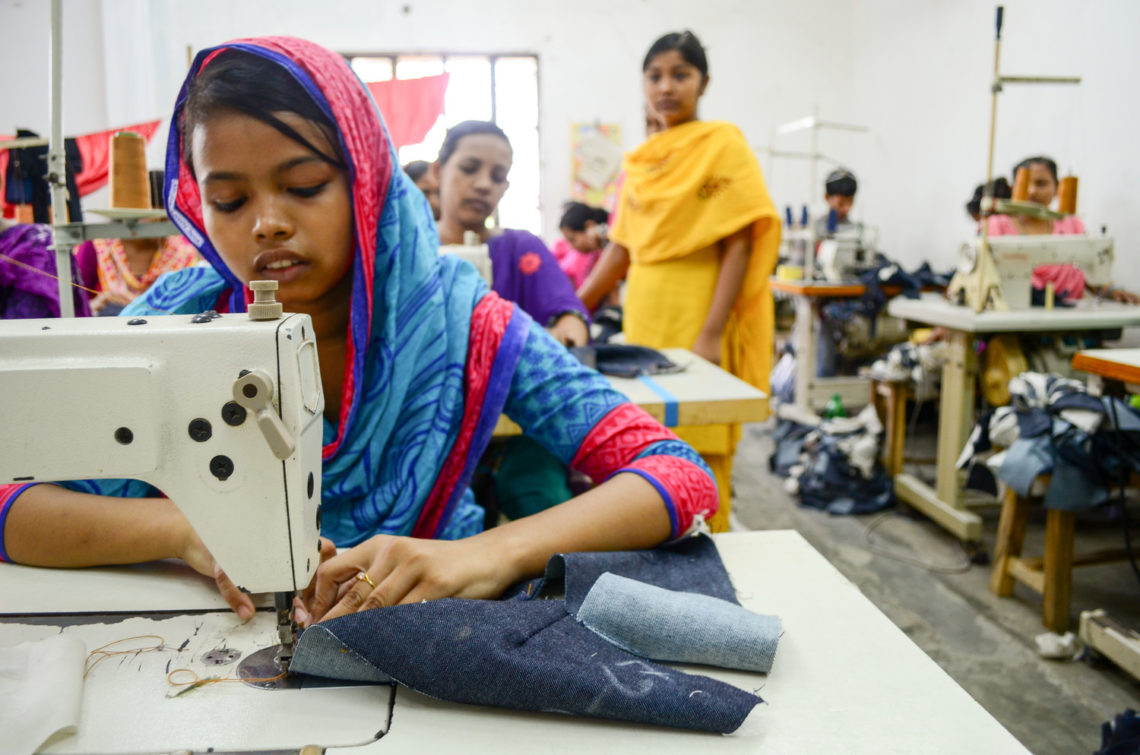
The needle hums, fingers fly, and piles of cloth are stitched together at record speed. “Sixty pockets an hour,” says Bithi, the 12-year-old behind the sewing machine.
Squished inside a second-story room in Dhaka, Bangladesh, flanked by 20 other women, the girl hunches over her machine, illuminated by harsh fluorescent lights. She is making pockets for blue jeans — one of thousands of child workers in Bangladesh piecing together designer clothing she’ll never be able to afford herself.
Abject poverty and a sick father forced Bithi’s family to send the two oldest daughters to the garment factories to sew designer clothes that will be sold in shops in Canada, the United States, and other affluent countries.
“The first day, I felt bad,” Bithi remembers. “I was too small. I was surrounded by other older people. That first day, I cried.”
But that was two years ago, when Bithi was 10. Now, it’s routine; no more tears. Every day, Bithi helps create a minimum of 480 pairs of pants, for about $1 in wages.
 childlabor